 Nepal
Nepal
has a long glorious history. Its civilization can be traced back to thousands of
years before the birth of Christ. History reveals dynasties of Ahirs and Gopalas,
Kirants, Licchavis and Thakuris ruling the country before the Malla period
began. Modern Nepal is an amalgamation of a number of principalities which had
independent entities in the past. Before the campaign of national integration
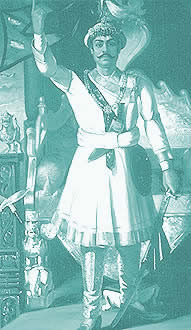
launched by King Prithivi Narayan Shah – the first Shah King of Nepal, Kathmandu
valley was ruled by the Malla Kings, whose contribution to arts and culture are
indeed great and the Malla era is considered to be the golden age of Nepal. In
1768 A.D., the Shah King defeated the Malla Kings and unified the country that
was divided into small independent Kingdoms.
 His
His
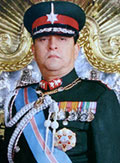
Majesty King Gyanendra Bir Bikram Shah Dev is the present King of Nepal. The
revolution of November 1950 brought an end to autocratic Rana regime that ruled
the country for 104 years since 1846 A.D. The Ranas seized all the power from
the Shahs but revered the existence of King in Nepal. After the fall of Ranas in
February 1951, Nepal first saw a dawn of democracy. The parliamentary government
under the multi-party system was adopted for some years which was later followed
by Panchayat System in 1960. The popular people’s movement of 1990 reinstated
the multi party democratic system and the new democratic constitution of the
Kingdom was promulgated on November 9, 1990. On February 1, 2005, King Gyanendra
made another historic move and assuming all executive powers headed a 10 member
cabinet with the commitment and assurance to bring back the lost PEACE in the
country within the next three years.
Nepal is one of the founding members of South Asian Association for Regional
Cooperation (SAARC) which was formed in December 1985. The SAARC Secretariat was
set up in Kathmandu in January 1987 and later in the same year in November,
third SAARC summit was held in Kathmandu.
Late King Birendra Bir Bikram Shah Dev ruled Nepal for 30
years from January 30, 1971 to June 1, 2001. His son Crown Prince Dipendra was
named King on June 2, 2001, after the unfaithful Royal family massacre of June
1, 2001 that took the lives of the King, Queen, Prince, Princess and five other
Royal family members. But King Dipendra soon died in hospital on June 4, 2001.
The younger brother of late King Birendra, His Majesty King Gyanendra Bir Bikram
Shah Dev was accessioned to throne on June 4, 2001 and currently rules the
country. He is the twelfth King in the Shah dynasty.
During a regular gathering at Narayanhity Royal Palace on the Friday night of
June 1, 2001, the gathered Royal family members were shot dead and some were
injured within a few minutes of time by Crown Prince Dipendra, who was heavily
under the influence of alcohol and drugs. Crown Prince Dipendra also shot
himself in an attempt of suicide over an argument he had with his parents about
the woman he wanted to marry. Crown Prince Dipendra was admitted to hospital in
a coma and critically wounded condition, but still was named the King.
The King in Nepal is seen as a Living God, the
reincarnation of Lord Vishnu. Late King Birendra was very popular and deeply
loved by the people of Nepal who were greatly shocked and saddened by the news
and it took quite a long time for the countrymen to come out from their self
mourning.
The King, Queen and other members of the Royal family were
carried to Pashupati Aryaghat, next to the Holy Bagmati River, for their last
rites. Desperate to know the truth, people blocked traffic in protest and riots
began in the streets of Kathmandu and even curfew had to be imposed to disperse
the restless crowd which just could not believe what had happened inside the
highly guarded Royal Palace.
People shaved their heads as a sign of respect for their
beloved King as they would have done in the demise of their family members as
per Hinduism and a 5 day closure of government offices and 13 days of official
mourning was announced. Just after 48 hours of the title “King”, King Dipendra
died in the hospital and the younger brother of late King Birendra, Prince
Gyanendra became the new King of Nepal - three Kings in 4 days.
The murder of Royals inside Narayanhity Royal Palace is said
to be the second worst mass killing of royalty in the world after the Romanovs,
who were killed back in 1918 during the Russian civil war.
General
Information
Travelers are ever-searching for the untrained path, for places and
peoples unspoiled and exotic. But, tourism can no longer afford to spoil new
discoveries. Litter and cultural pollution soon erode visitor appeal and more
important, indigenous lifestyles dependent upon a delicate natural balance
vanish forever. Responsible tourism is a more sound investment where everybody
wins.
In Nepal, tourism contributes to children's
dental problems in mountain villages where sweets and cavities were once
unknown. Garbage left by mountaineering expeditions piles up higher and higher,
and international media reports of toilet paper-strewn trekking trails grossly
exaggerate a real concern. Forest suffer enough from local demands. Trekkers
food and lodging needs further fuel the problem. Art theft not only depletes a
reach cultural heritage but is undermining the Nepalese peoples trust of
outsiders.
Nepal heartily welcomes you, the visitor. But,
whether you are trekking in the mountains or touring the Kathmandu Valley, we
ask that you treat the land and its peoples with care and respect. Below are
some tips on how you can keep the environment clean and show appreciation for
age-old culture and traditional religious beliefs.
Green Trekking
In Nepal, eco-tourism is more than a
catch phrase to mean outdoor adventure travel. Green or eco-trekking practices
are sound measures such as carrying out or disposable of garbage and burning no
wood on the trail. Ask your trekking agent and lodge operator about their
conservation policies. Green trekking may cost a little more but is much better
for the environment.
You can also help out by following these
guidelines:
- Litter Free:
Carry all your trash (including toilet paper, unless you thoroughly burn it on
the spot) to your campsite, lodge or hotel for proper disposal. If trekking
with an agency, ask the staff to designate separate places for biodegradable
and others (i.e., bottles, tins, plastics, foil, batteries etc.) which should
be packed out to Kathmandu or the next refuse pit. As fires are considered
sacred, don't put trash in the flames until the cooking is done and always
inquire first. - Lady Details:
Sanitary napkins and tampons should be wrapped well and packed out. Take
batteries back to your home country for safe disposal. - Toilet Sites:
Make sure your trek operator provides a toilet tent, set up at least 50 meters
(150 feet) away from any water source. If you are tea-house trekking, select
lodges with a well-sited latrines. Otherwise, pick a spot away from water and
religious sites. Bury all excreta. In the cities and en route, public toilets
are hard to find so be discreet and keep away from holy sites. - Biodegradable
Washing: When bathing or washing clothes near streams, use
biodegradable soaps and a pan for rinsing. Toss soapy water away from the
stream. - Use Established
Campsites: Encourage your trekking staff to camp in
established campsites and to leave no trace: no trash, no tent trenches, no
fire pit, and a toilet pit filled in to look as it did before digging. - Cook with
Kerosene: If you are camping, request that cooking be done on
kerosene or gas, not wood. If you're stuck using wood, reduce the amount by
using iodine to treat water rather than boiling it. Choose lodges that use
kerosene or fuel efficient stoves, such as the back-boiler which heats water
while food cooks. You can also reduce firewood consumption by ordering the
same food at the same time as others. - Solar Heated
Showers: Limit your hot showers to those heated by solar
energy, by hydroelectricity or by the back-boiler method. - Warm Clothes:
Bring adequate clothes rather than relying on lodge hearths for heat and never
ask your trekking staff for a bonfire. See that porters will be provided
shelter, clothing and shoes for high altitude treks, saving wood otherwise
burned to keep warm. - Do Not Disturb:
Avoid creating new trails across switchbacks, meadows and in high fragile
areas. Make sketches or take photos rather than collect flower, plants and
seeds. Do not purchase items made from wild animals skins or furs. Take care
while walking through farmland and always stay to the uphill side of livestock
on trails.
Dress and
Attire
Baggy pants or calf-length skirts with a loose top are appropriate
trekking and touring wear for women. Men should wear a shirt at all times. Men's
knee-length hiking shorts are fine for trekking but not when visiting temples,
monasteries or homes.
Nudity is particularly offensive. Whether bathing
in a stream or at a village tap, men should wear shorts or underwear, women can
wrap in a loongi (sarong) and douse themselves as the village women do. Only
sport a swimsuit if well secluded from village eyes. Public affection is
likewise frowned upon.
Artifacts and Antiques
It is illegal to export anything older than 100 years. Please do not
take any religious objects (prayer stones, statues, temple ritual objects,
prayer flags, etc.) away from sacred sites and discourage others from doing so.
Taking Photos
Most Nepalese don't mind being photographed, but some do. Ask first,
especially if photographing ceremonies or older people. Paying for a picture
reinforces a hand-out mentality. Try instead to establish a friendly rapport
with a few words or gestures.
Beggars
Do not give candy, pens, trinkets or money to children but instead
donate to a school, monastery or hospital. Nepalese give a few rupees to the
handicapped and religious mendicants; you can do the same.
Bargaining
Bargain for souvenirs and trekking services but respect posted prices
in restaurants and lodges. Ask around to establish a fair price: paying too much
adds to inflation and paying too little denies the merchant of a fair return.
- To show appreciation and respect, use two
hands rather than one when giving or receiving something, even money. - Remember not to point with a single finger but
use a flat extended hand especially to indicate a sacred object or place. - Among Hindus, avoid touching women and holy
men the traditional palms-together "Namaste" greeting is preferable. - Don't eat with your left hand and nor eat beef
among Hindus. - Try not to step over or point your feet at
another person, a sacred place or a hearth. - Remove your shoes when entering a home, temple
or monastery (and leather items in Hindu temples) and avoid smoking and
wearing scant dress in religious settings. - Do not offer food from your plate, nor eat
from a common pot, and avoid touching your lips to a shared drinking vessel.
Giving Tips
Tipping is a newly accepted custom in Nepal. Hotel, restaurant, touring
and trekking organization staff members often make up for relatively meager
wages with tips. But, it should only reward good work. Don't tip for short taxi
rides in town or any service person you've bargain with. Groups might give a
reasonable amount per day to a tip pool to be divided among the staff, generally
relative to rank, for good service.
Medical
Attention
Even if you are an experienced medical practitioner, it is not wise to
give medicine to a sick Nepali on the trek unless you can watch his or her
reaction. Most Nepalese have never been exposed to Western medicine and may
react unpredictably. Encourage villagers to wash cuts with soap and boiled
water, and to see their closest clinic for medical treatment.
- Trek with Others:
Never trek alone; if you run into trouble or take a tumble no one will know.
Trekking with an agency assures the greatest security. - Security:
Watch your gear carefully in lodges and on the trail. Don't be showy with
expensive items, and always lock your room or baggage. - High Altitude
Sickness: Find out more from your agent or the Himalayan
Rescue Association (HRA) about this sickness and helicopter rescue options.
Always register your trekking plans with your embassy, consulate or HRA.
Beware of other trail hazards, watch where you are going and don't over-extend
yourself. - Eating and
Drinking: Never eat unpeeled fruit or vegetables unless you
know they've been adequately soaked in solution. Drink only after water is
boiled or iodized. Always wash your hands before eating.

No comments:
Post a Comment